


How to Start Preparing for Cambridge Exams Without Feeling Overwhelmed

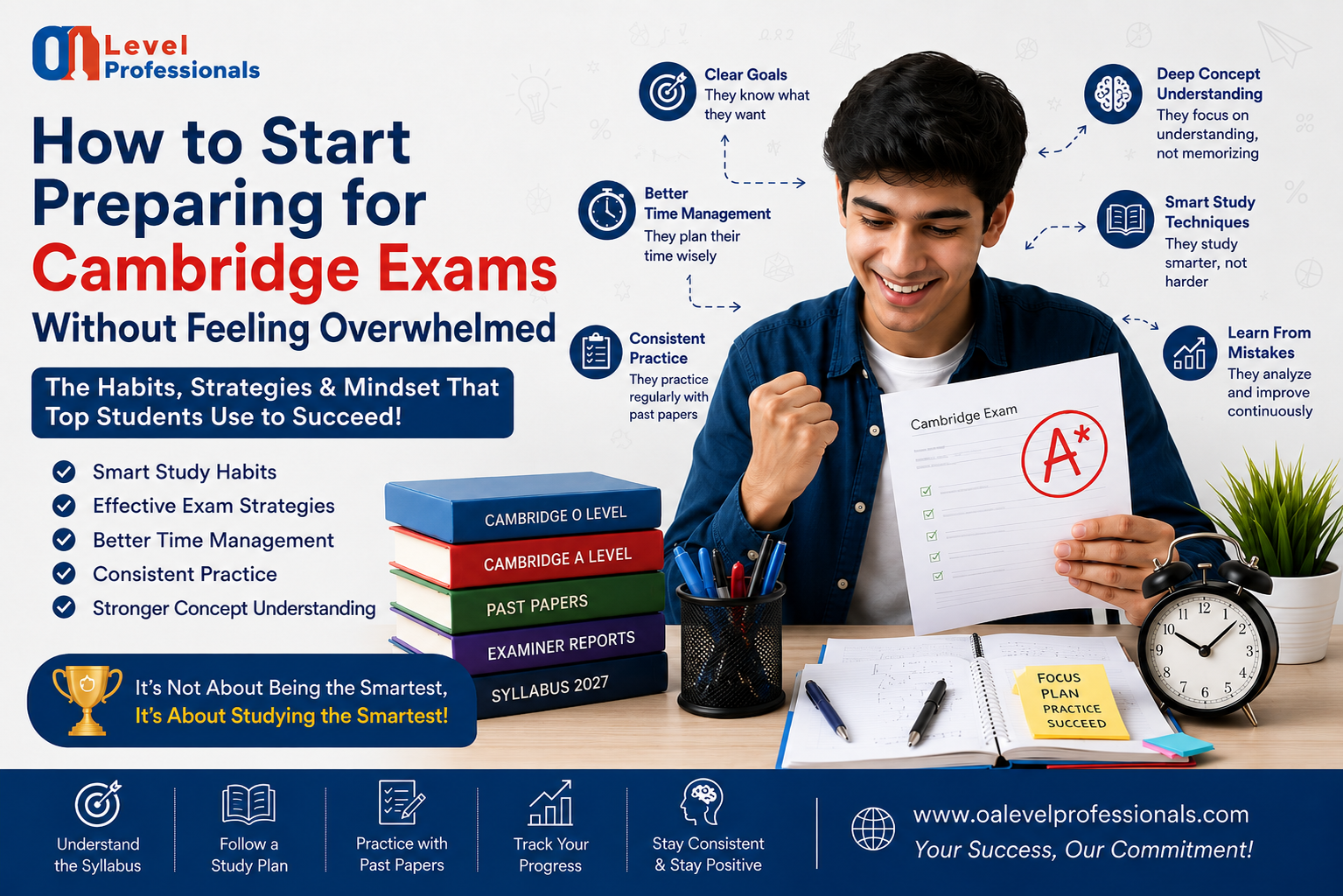
Preparing for Cambridge O Level and A Level examinations can feel overwhelming, especially when you look at the entire syllabus, multiple subjects, and the pressure to achieve excellent grades. Many students don’t struggle because the subjects are too difficult—they struggle because they don’t know where to begin. The good news is that successful exam preparation doesn’t require studying all day or memorising everything at once. It starts with a clear plan, consistent effort, and the right mindset.
The first step is to avoid trying to study everything at once. Looking at an entire year’s syllabus can make anyone feel anxious. Instead, break each subject into smaller topics and focus on completing one section at a time. Small daily achievements build confidence and make the workload feel much more manageable.
Your next priority should be downloading and reviewing the latest Cambridge syllabus for each subject. The syllabus tells you exactly what you need to learn and helps you avoid spending time on topics that are not assessed. It also gives you a clear direction for your revision and ensures that every study session has a purpose.
Creating a realistic study timetable is another essential step. Rather than studying for long hours without focus, schedule shorter study sessions with regular breaks. Allocate time to every subject during the week while giving extra attention to topics you find challenging. A balanced timetable helps you stay organised and reduces the stress of last-minute revision.
Past papers are one of the most valuable resources for Cambridge students. However, many students make the mistake of attempting them too early without understanding the concepts. Begin by learning the topics thoroughly, then gradually introduce topic-based and full-length past papers into your routine. Practising under timed conditions will improve your speed, accuracy, and confidence.
Don’t compare your progress with other students. Everyone learns at a different pace, and comparing yourself to classmates often creates unnecessary pressure. Instead, focus on improving your own understanding each week. Even small improvements add up over time and lead to significant progress by the exam season.
Another effective strategy is to revise actively instead of passively reading textbooks. Create summary notes, use flashcards, draw diagrams, teach concepts to a friend, or explain topics aloud to yourself. Active learning improves understanding and helps you remember information for longer.
Taking care of your physical and mental well-being is just as important as studying. Get enough sleep, eat healthy meals, stay hydrated, and take short breaks during revision sessions. A well-rested mind is far more productive than one that is tired and stressed. Remember that consistency is more valuable than studying for extremely long hours.
As your exams get closer, begin solving full past papers, reviewing mark schemes, and reading examiner reports. These resources help you understand what Cambridge examiners expect and how marks are awarded. Learning from your mistakes during practice is one of the fastest ways to improve your performance.
Finally, remember that every top-performing Cambridge student started exactly where you are today. They achieved success by staying organised, following a structured plan, and remaining consistent throughout the year. You do not need to be perfect—you simply need to make steady progress every day.
At O/A Levels Professionals, we encourage students to focus on smart preparation rather than stressful preparation. With the right guidance, quality resources, and consistent effort, you can prepare confidently for your Cambridge examinations and achieve the grades you are aiming for.
FAQ’S
It is best to begin your preparation at least 3–6 months before the exam. Starting early gives you enough time to understand concepts, revise thoroughly, and practise past papers.
Break the syllabus into smaller sections, create a realistic study timetable, and focus on completing one topic at a time instead of trying to study everything at once.
Yes. The official Cambridge syllabus helps you understand exactly what topics will be assessed and keeps your preparation focused.
Begin practising past papers after you have covered the main concepts of each topic. As the exam approaches, solve full-length papers under timed conditions.
Quality matters more than quantity. Focused study sessions of 2–4 hours a day, depending on your schedule, are usually more effective than long, unproductive hours.
Use active learning techniques such as making summary notes, solving past papers, using flashcards, practising recall, and reviewing examiner reports.
Yes. Many students experience exam stress. Following a study plan, taking regular breaks, maintaining healthy habits, and preparing consistently can help reduce anxiety.
Confidence comes from preparation. Regular revision, timed practice papers, and reviewing your mistakes will make you feel more prepared and self-assured.
Here’s a professional 4-line paragraph you can use as an internal link in your blog:
Artificial Intelligence can be a powerful learning tool when used correctly, but it should support your learning—not replace it. Read our “How to Use AI Responsibly for Cambridge Exam Preparation” to discover practical ways to use AI for revision, concept clarification, and study planning while maintaining academic integrity and exam readiness.
Phone No:+92-3167742629
Email: info@oalevelprofessionals.com
Instagram:https://www.instagram.com/oalevelprofessionals/
Facebook: https://web.facebook.com/OALevelProfessionals
Tiktok:https://www.tiktok.com/@oalevelprofessionals