


The Cambridge Exam Guide No One Gives You

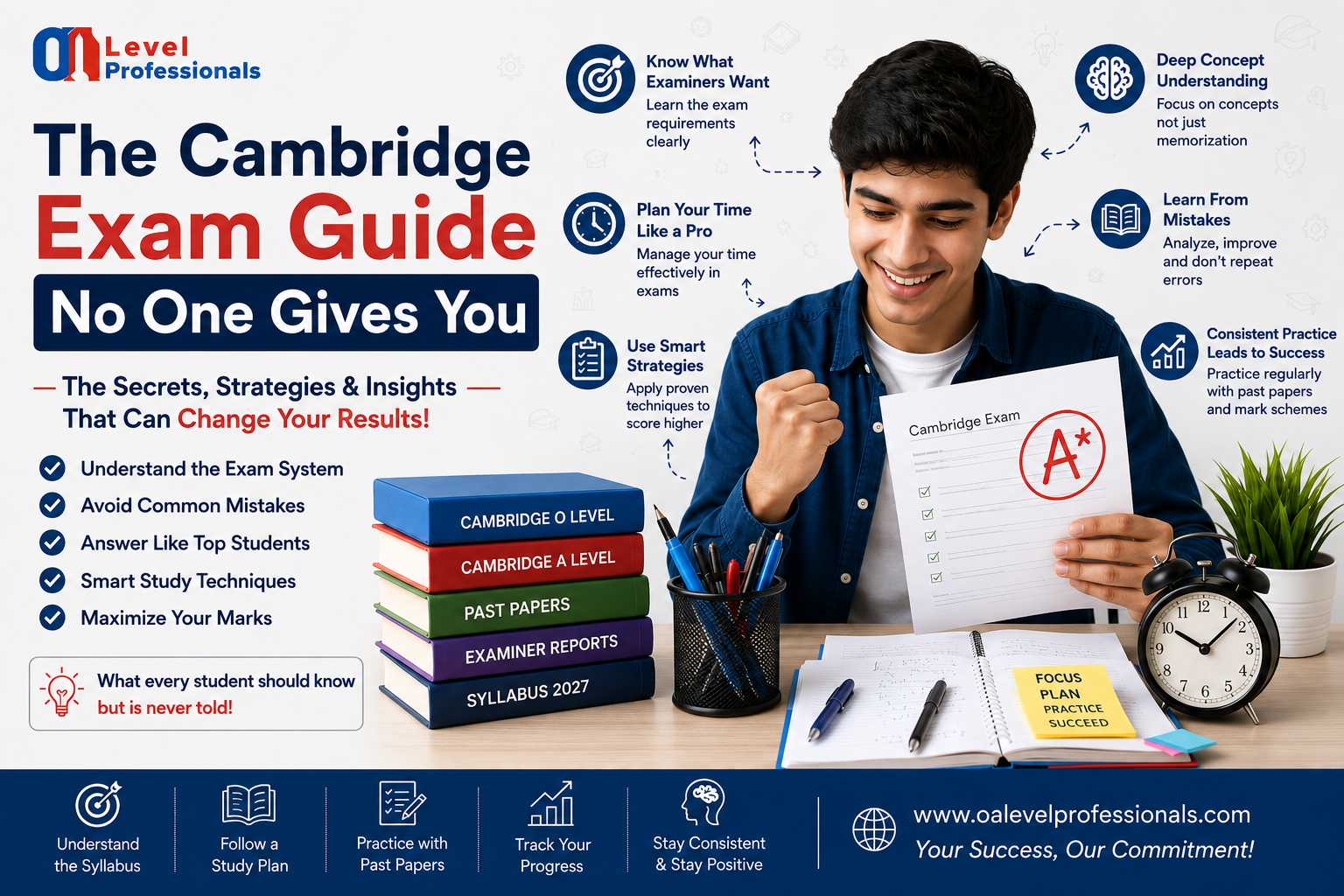
Every year, thousands of students prepare for Cambridge O Level and A Level examinations by studying textbooks, attending classes, and solving past papers. While these are essential parts of exam preparation, there are several important strategies that many students never learn. These hidden techniques often make the difference between average grades and outstanding results. This is the Cambridge exam guide that most students wish they had before sitting their first exam.
The first secret is understanding that Cambridge exams are designed to assess your ability to apply knowledge, not simply memorise facts. Many students spend hours trying to remember every detail from their textbooks, but Cambridge examiners reward candidates who demonstrate understanding, logical thinking, and problem-solving skills. Instead of asking yourself, “Can I memorise this?” ask, “Can I explain this concept in my own words?”
Another important strategy is learning how to read questions carefully. Many students lose marks because they answer a different question than the one being asked. Always pay close attention to command words such as Describe, Explain, Compare, Evaluate, Discuss, and Calculate. These words tell you exactly what the examiner expects. Spending an extra 30 seconds understanding the question can save valuable marks.
One of the biggest mistakes students make is ignoring the official Cambridge mark schemes and examiner reports. These documents are like a guide written directly by the people who assess your papers. They explain common mistakes, show examples of strong answers, and highlight the keywords that earn marks. Students who regularly review these resources develop a much better understanding of how to answer questions effectively.
Time management is another factor that often separates high-achieving students from the rest. During the exam, don’t spend too much time trying to perfect one difficult question. Answer the easier questions confidently first, then return to the more challenging ones. Managing your time wisely ensures that every question has an opportunity to earn marks.
Many successful students also create a mistake journal. After every test or past paper, they write down the questions they answered incorrectly and explain why they made those mistakes. Revisiting this journal regularly prevents the same errors from happening again and turns weaknesses into strengths.
Healthy study habits are equally important. Studying for long hours without breaks can reduce concentration and increase stress. Short, focused study sessions combined with regular breaks are far more productive. Getting enough sleep, staying hydrated, eating nutritious meals, and maintaining a positive mindset all contribute to better learning and stronger exam performance.
Confidence also plays a major role in Cambridge exams. Confidence doesn’t come from luck—it comes from preparation. Students who consistently revise, practise past papers, and review their mistakes enter the examination hall with greater confidence and less anxiety. Believing in your preparation allows you to perform at your best under exam conditions.
Finally, remember that success in Cambridge exams is not about finding shortcuts. It is about studying smart, staying organised, practising consistently, and learning from every experience. Small improvements made every day lead to significant results over time.
At O/A Levels Professionals, we believe that every student deserves access to the strategies that truly work. With expert guidance, structured study plans, past paper practice, and effective exam techniques, you can prepare with confidence and maximise your potential. The right guidance doesn’t just help you pass your exams—it helps you achieve the results you are capable of.
FAQ’S
The most common mistake is answering questions without carefully reading the command words or understanding exactly what the examiner is asking.
Mark schemes show how marks are awarded and highlight the keywords, points, and structure expected in high-scoring answers.
Yes. Examiner Reports explain common mistakes made by candidates and provide practical advice for improving your exam performance.
No. Cambridge examinations focus on understanding, application, analysis, and problem-solving rather than simple memorisation.
Practise past papers under timed conditions, review mark schemes, analyse your mistakes, and become familiar with Cambridge question styles.
Start with the questions you know well, avoid spending too much time on one question, and leave a few minutes at the end to review your answers.
Ideally, practise at least one or two past papers each week during your preparation and increase the frequency as exams approach.
Prepare consistently, follow a study timetable, get enough sleep, exercise regularly, and avoid last-minute cramming.
Ever wondered why some students consistently achieve top grades in Cambridge exams while others struggle despite working hard? Discover the habits, study strategies, and exam techniques that set high achievers apart in our blog,” Why Some Students Always Score Higher in Cambridge Exams”. Learn what successful students do differently and start improving your own results today.
Call uS oN : 03167742629Contact Us:
Phone No:+92-3167742629
Email: info@oalevelprofessionals.com
Instagram:https://www.instagram.com/oalevelprofessionals/
Facebook: https://web.facebook.com/OALevelProfessionals
Tiktok:https://www.tiktok.com/@oalevelprofessionals