


The Ultimate Cambridge Exam Preparation Checklist

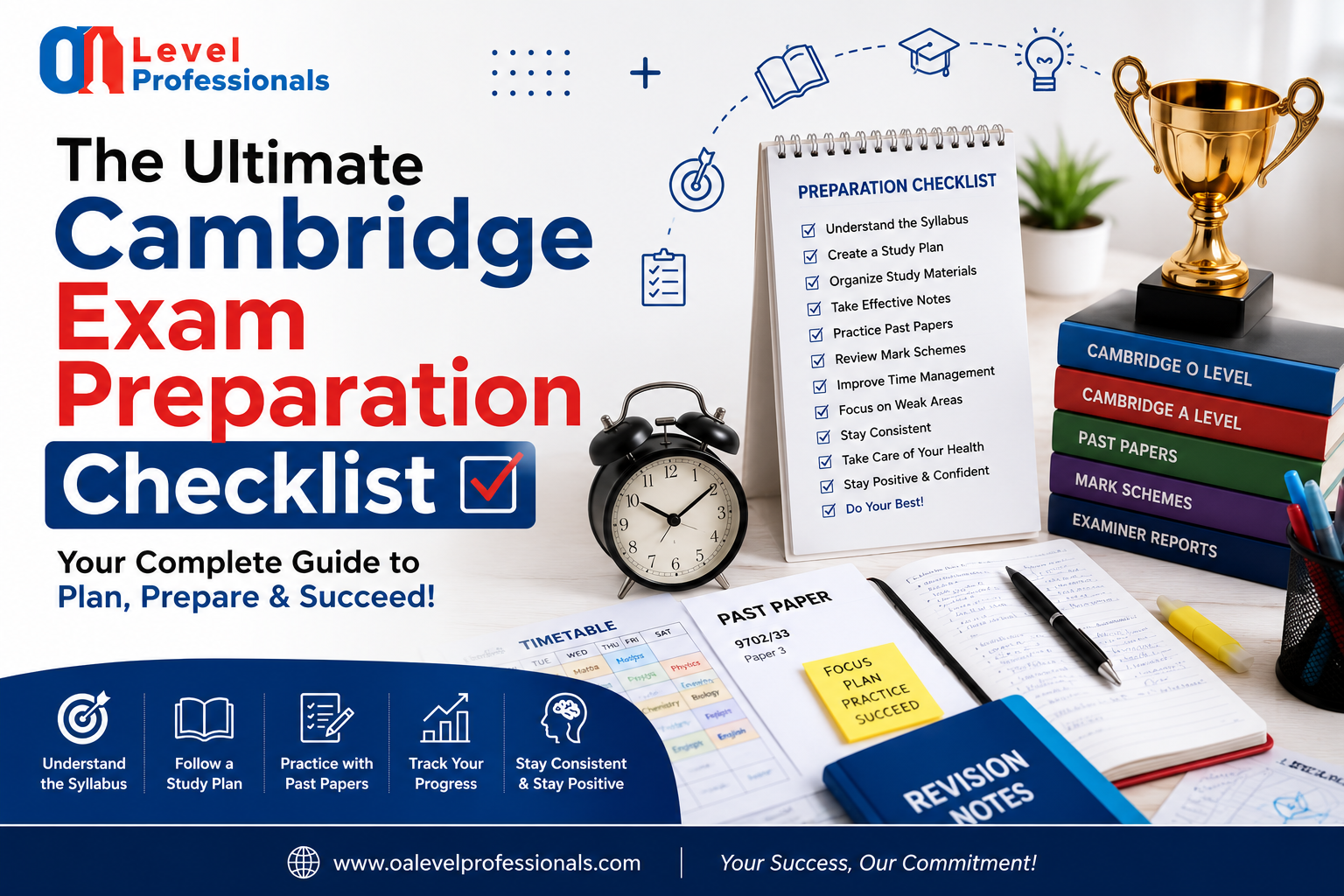
Preparing for Cambridge O Level and A Level examinations requires much more than simply reading textbooks a few weeks before the exams. Success comes from having a clear strategy, staying consistent, and following a well-organized study plan. Whether you are preparing for your first Cambridge examination or aiming for top grades, following the right preparation checklist can help you study smarter, reduce stress, and improve your overall performance.
The first step in every successful preparation plan is understanding the official Cambridge syllabus. Many students make the mistake of studying topics that are no longer included or ignoring important learning objectives. Download the latest syllabus for each subject and use it as your study roadmap. Every chapter you revise should match the syllabus to ensure that your preparation is focused and effective.
Next, create a realistic study timetable. Instead of studying randomly, divide your subjects into manageable daily or weekly goals. Allocate extra time to subjects you find difficult while also revising your stronger subjects regularly. A balanced timetable helps prevent last-minute cramming and improves long-term retention.
One of the most effective ways to prepare for Cambridge exams is by practising past papers. Past papers familiarise you with the exam format, question styles, and marking patterns. Solve papers under timed conditions to improve your speed, accuracy, and confidence. After completing each paper, compare your answers with the official mark scheme to understand where you gained or lost marks.
Examiner Reports are another valuable resource that many students overlook. These reports highlight common mistakes made by candidates and explain what examiners expect in high-scoring answers. Learning from these reports allows you to avoid repeating the same errors and improves your exam technique.
Revision should focus on understanding concepts rather than memorising information. Use mind maps, flashcards, summary notes, and practice questions to strengthen your understanding. Teaching a topic to someone else is also an excellent way to test your knowledge and identify weak areas.
Don’t forget to organise all your study materials before the exam season begins. Keep your notes, textbooks, formula sheets, calculators, stationery, and other essentials ready. Being organised saves valuable time and helps you stay focused throughout your preparation.
Looking after your physical and mental well-being is equally important. Get enough sleep, eat healthy meals, stay hydrated, and take regular short breaks during study sessions. Avoid comparing yourself with others and focus on your own progress. A healthy body and a positive mindset significantly improve concentration and productivity.
As the exam approaches, revise key topics instead of trying to learn completely new material. Review important formulas, definitions, diagrams, and frequently tested concepts. During the final week, solve full-length mock exams to simulate the actual exam environment and build confidence.
Finally, remember that consistency is the key to success. Studying a little every day is far more effective than studying for long hours only a few days before the exam. Stay disciplined, review your progress regularly, and believe in your preparation.
At O/A Levels Professionals, we encourage every student to follow a structured preparation plan instead of relying on last-minute revision. By following this ultimate Cambridge exam preparation checklist, you can enter the examination hall feeling confident, organised, and fully prepared to achieve your academic goals.
FAQ’S
It is recommended to start preparing at least 3–6 months before your Cambridge O Level or A Level examinations to allow enough time for revision and practice.
Past papers are one of the most effective preparation tools because they help students understand question patterns, improve time management, and become familiar with the exam format.
Yes. The official syllabus helps you focus on the topics that are actually assessed in the examination and prevents unnecessary study.
The number of study hours depends on your schedule and subjects, but consistent daily study with regular breaks is generally more effective than long, exhausting study sessions.
Use active revision methods such as solving past papers, reviewing mark schemes, creating summary notes, using flashcards, and practising under timed conditions.
Examiner Reports explain common student mistakes and provide valuable insights into what Cambridge examiners expect in high-scoring answers.
Practice full-length past papers within the official exam time and learn to allocate time for each question according to its marks.
No. Cambridge examinations focus on understanding, application, and analysis rather than simple memorisation. Understanding concepts leads to better performance.
Want to know what Cambridge examiners really expect from your answers? Understanding how papers are marked can help you avoid common mistakes and maximise your score. Read our” What Every Cambridge Examiner Wishes Students Knew” to discover expert insights that can improve your exam technique and boost your confidence on exam day.
Call uS oN : 03167742629Contact Us:
Phone No:+92-3167742629
Email: info@oalevelprofessionals.com
Instagram:https://www.instagram.com/oalevelprofessionals/
Facebook: https://web.facebook.com/OALevelProfessionals
Tiktok:https://www.tiktok.com/@oalevelprofessionals